
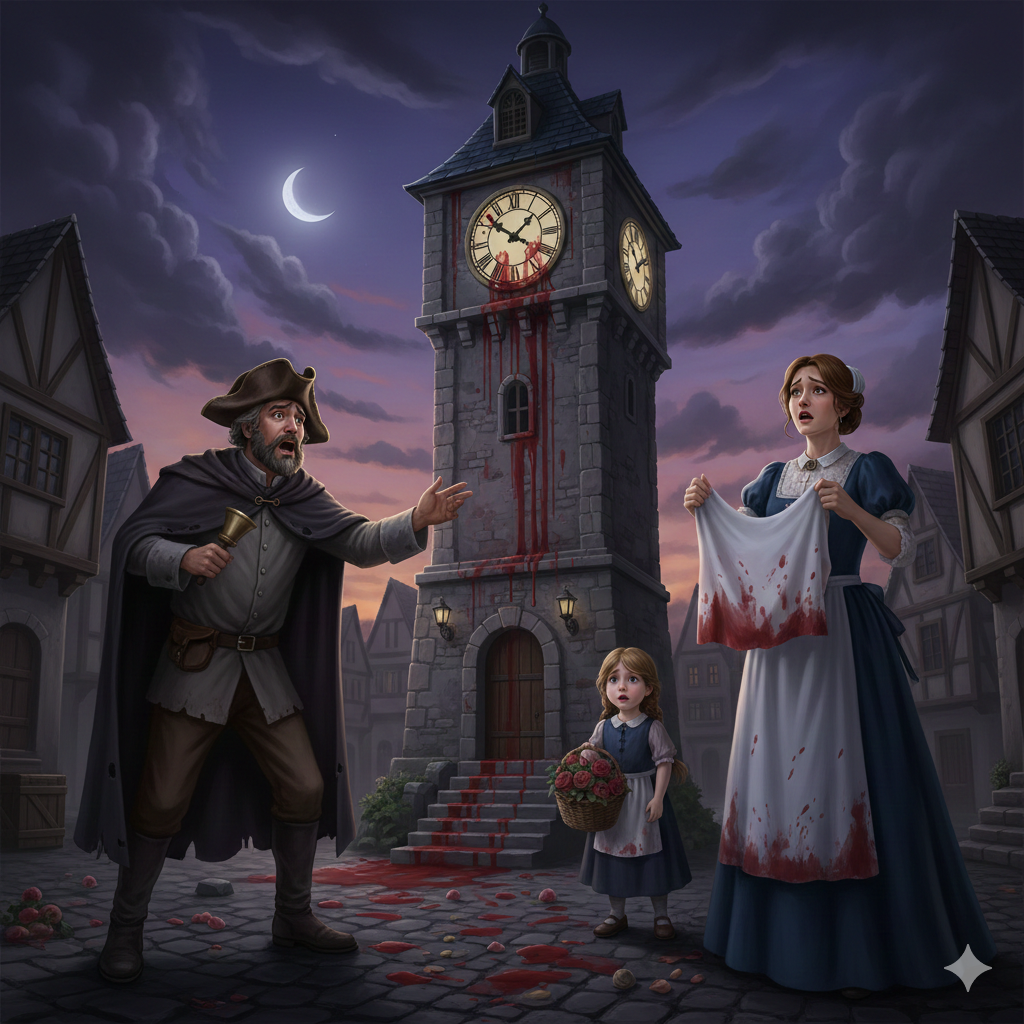
The Art of Madness: Why Sects & Violets Changes Everything
If Trouble Brewing is a logic puzzle and Bad Moon Rising is a thriller, then Sects & Violets is a psychological horror. It is widely considered the wildest of the three base editions, offering a steep but rewarding learning curve for groups ready to question their own sanity.
Where previous scripts teach you to trust your team or trust the mechanics, Sects & Violets teaches you that you cannot even trust yourself.
Information Overload
The most immediate lesson in Sects & Violets is dealing with an abundance of information. Unlike the scarcity in Trouble Brewing, Townsfolk here receive powerful, specific data every night.
- The Dreamer sees exact roles.
- The Flowergirl tracks the Demon’s voting habits.
- The Savant receives unique logic puzzles daily.
The challenge isn’t finding information—it is filtering it. Players learn to sift through a flood of data to find the one kernel of truth hidden inside a Vortex of lies.
The Mechanic of Madness
Sects & Violets introduces “Madness,” a mechanic that forces players to behave in specific ways or face execution. This fundamentally changes the social landscape of the game.
Performance Play
Players are no longer just solving a puzzle; they are performing a role. A Mutant must convincingly play as an Outsider, while a victim of the Cerenovus must convincingly play as a specific Good character.
Breaking Social Reads
This teaches groups that “acting suspicious” is no longer a guaranteed sign of Evil. It adds a layer of social deduction where players must decipher if someone is lying because they are the Demon, or lying because they are trying to save their own life.
Evil is in Control
In other scripts, the Evil team often feels like they are hiding. In Sects & Violets, the Evil team feels like they are hunting.
Active Disruption
Minions like the Witch and the Pit-Hag don’t just support the Demon; they dictate the flow of the game. Evil learns to curse players, swap characters, and force the Good team to play by their rules.
Knowing the Enemy
With characters like the Spy and the Widow, Evil often knows exactly who the Good players are. This flips the script: Good is often playing with an open hand against an Evil team that knows everything.
Fluidity of Identity
Perhaps the most advanced lesson in Sects & Violets is that your character—and your alignment—is not permanent.
- The Fang Gu can turn an Outsider into a Demon.
- The Snake Charmer can swap teams with the Demon.
- The Philosopher and Pit-Hag can change characters mid-game.
This forces players to be adaptable. You cannot simply solve the game based on the setup; you must solve the game as it transforms effectively every night.
A Creative Canvas for Storytellers
For Storytellers, Sects & Violets is the ultimate test of creativity.
- Crafting balanced Savant information.
- Judging Madness breaks fairly.
- Managing the immense cognitive load of the Spy or Window.
It turns the Storyteller from a referee into a Dungeon Master, requiring active participation in the narrative of the game.
The Most Replayable Script
Because of the high variance in character interactions and the “shifting sands” nature of the game state, no two games of Sects & Violets ever feel the same. It creates memorable stories of betrayal, accidental Demon swaps, and last-minute deductive miracles.
It teaches players that Blood on the Clocktower is not just a game of logic, but a game of chaos management.
Tracking the Madness
When players are changing characters, alignments are flipping, and half the town is lying about who they are due to madness, a pen and paper often isn’t enough.
That’s where botc-tracker.com comes in.
Logging Sects & Violets games allows groups to untangle the complex web of role swaps and misinformation, helping players see the logic hidden underneath the insanity.
If Trouble Brewing is learning to walk, Sects & Violets is learning to run through a hall of mirrors.