
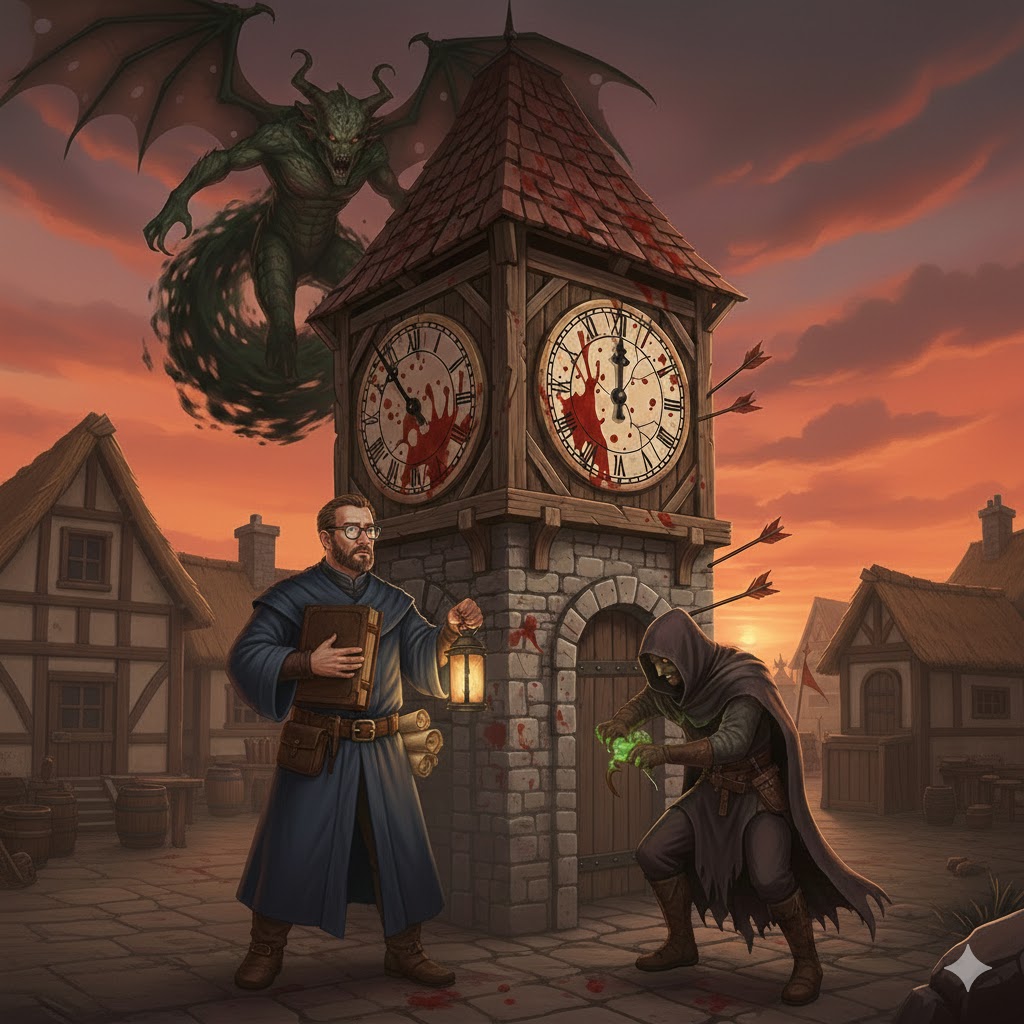
Why Outsiders Are the Most Misunderstood Character Type
Outsiders are often introduced to new players as “good characters with a downside.” That is true, but it is also incomplete. In Blood on the Clocktower, Outsiders are not just weaker Townsfolk.
They are pressure points. They distort information, complicate trust, and force the good team to solve the game with uncertainty built into its own side.
Outsiders Change the Shape of Good
Townsfolk usually help the good team by producing information, protection, or mechanical leverage. Outsiders help the game by making Good less comfortable.
A well-placed Outsider can change how the town reads the entire script.
- An Outsider count may suggest which Demon is in play.
- An Outsider claim may confirm or challenge a setup.
- An Outsider ability may create misinformation from inside the good team.
- An Outsider may become a perfect bluff for Evil.
Being Harmful Is Not the Same as Being Useless
Some players dislike Outsiders because their abilities appear negative. But a harmful ability can still create useful information.
If a player can prove they are an Outsider, that may help narrow the script. If their ability explains strange information, it may prevent the town from chasing the wrong world. Even a dangerous Outsider can become strategically important once understood.
The Saint Is Not Just a Liability
The Saint creates a powerful social and mechanical threat. Executing the Saint can lose the game, which means the town must decide whether a Saint claim is real, evil, or being used as cover.
The Recluse Is Not Just Confusing
The Recluse can register as evil, which makes information harder to read. But that uncertainty can also explain contradictions that would otherwise point to the wrong player.
Outsider Count Is Information
Many scripts use Outsider count as a clue. The number of Outsiders in play may suggest which Demon or Minion is active, whether a character is lying, or whether the setup has been changed by another ability.
This makes Outsider claims important even when the characters themselves do not seem powerful.
Why Evil Loves Outsider Claims
Outsider claims are attractive bluffs because they often explain passivity, confusion, or suspicious information.
An evil player claiming an Outsider may be able to avoid producing information, explain why they do not want to be executed, or create doubt around the setup.
- A fake Outsider can distort the expected count.
- A fake Outsider can make a real Outsider look suspicious.
- A fake Outsider can absorb attention without giving the town useful data.
This is why the town should not automatically trust Outsider claims, even though they come from the good team in theory.
Outsiders Teach Better Play
Outsiders teach players that being good does not always mean being clean, confirmable, or helpful in an obvious way.
A good player may need to admit that their character causes problems. They may need to explain how their downside affects the game without accidentally giving Evil an easy path to hide.
Storytellers Use Outsiders Carefully
Outsiders are one of the Storyteller’s strongest tools for shaping difficulty. Too few sources of internal uncertainty can make Good overly comfortable. Too much can make the game feel arbitrary.
The best Outsider use creates interesting problems rather than hopeless confusion.
Reading Outsider Statistics
Outsider win rates can be especially misleading. A low win rate does not necessarily mean the character is badly designed. The character may be doing exactly what it is supposed to do: making Good’s task harder.
A high win rate can also be deceptive. Some Outsiders may appear more often in scripts where Good is already strong, or in groups that understand how to handle them well.
Tracking Outsider Patterns
Outsiders are worth tracking because their impact is often remembered vaguely. People remember that a game felt strange, but not always why.
That’s where botc-tracker.com becomes useful.
Recording Outsiders, scripts, player counts, and results can help your group see how these characters actually affect your games over time. You may discover that certain Outsider claims are trusted too easily, that some scripts create more confusion than expected, or that your group handles specific downsides better than you thought.
Outsiders are not failed Townsfolk. They are the good team’s built-in uncertainty, and learning to play around them is part of learning Clocktower well.