
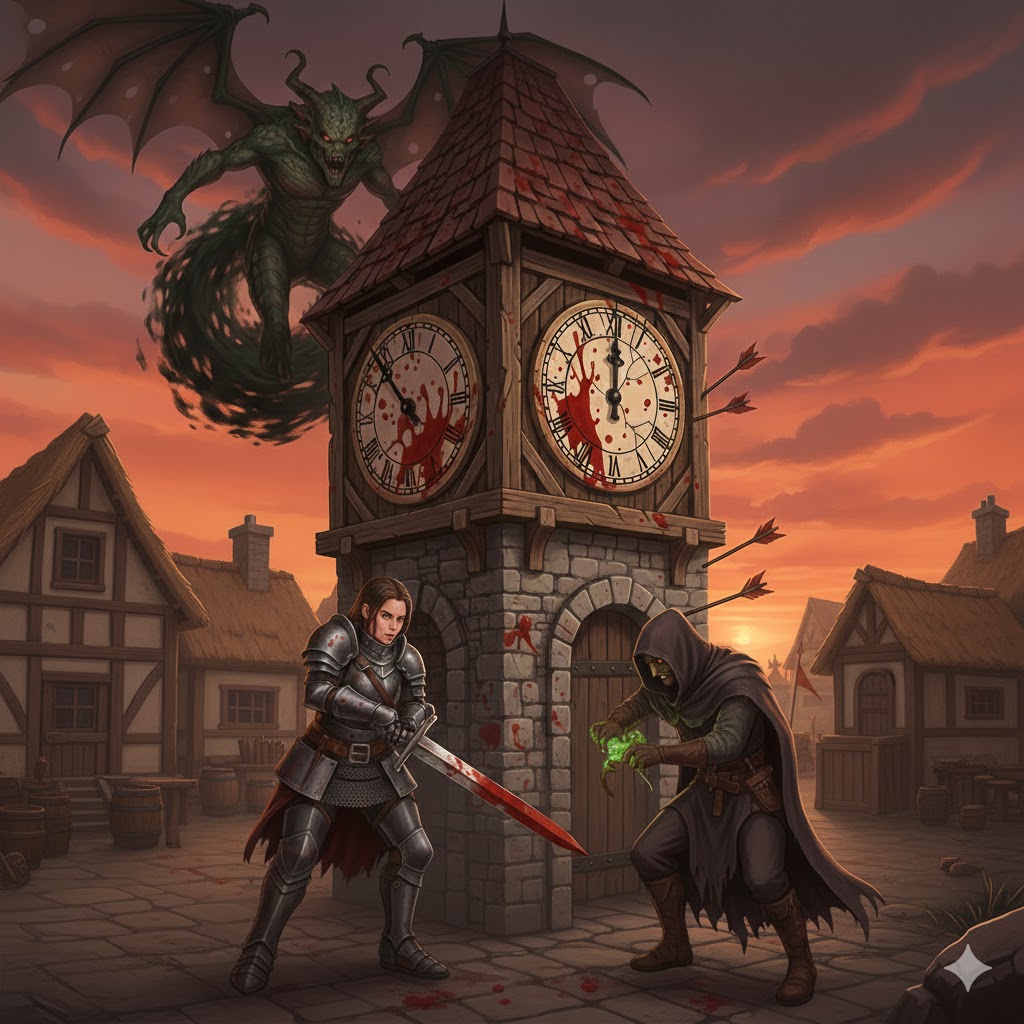
Why the Final Three Defines a Blood on the Clocktower Game
Many Blood on the Clocktower games are remembered by their final three. After hours of whispers, claims, deaths, nominations, and half-built worlds, the game often narrows to one last decision.
The final three is not just the end of the game. It is the moment where every earlier conversation is tested.
Why Final Three Feels Different
Earlier in the game, the town can afford some uncertainty. A wrong execution may hurt, but it may also create information. A suspicious player can be tested later. A strange claim can sit unresolved for another day.
In final three, that safety disappears. The town usually has one execution left, and Evil only needs enough doubt to survive it.
Pressure Changes Behaviour
Players who seemed calm earlier may become defensive. Quiet players may suddenly speak more. Confident theories may start to wobble when everyone realises there is no more room to test them.
Memory Becomes Crucial
The final decision often depends on what people remember from much earlier in the game. Who claimed first? Who changed their story? Who pushed which execution? Who benefited from a particular death?
The Danger of Last-Minute Certainty
One of the biggest traps in final three is certainty that arrives too late and too loudly.
A player may suddenly declare that the Demon is obvious. Sometimes they are right. Sometimes they are Evil trying to create momentum before anyone can slow the table down.
Final three rewards confidence, but confidence is not the same as truth.
What Good Needs in Final Three
Good players usually need more than a single accusation. They need a world that explains the game.
- Why is this player the Demon?
- Who were their likely evil teammates?
- Which information supports that world?
- Which information contradicts it?
- Why did the night deaths happen the way they did?
A strong final three conversation compares worlds rather than only comparing personalities.
What Evil Needs in Final Three
Evil does not always need to be fully believed. Sometimes Evil only needs the town to be uncertain enough to execute the wrong player.
That means an evil player may aim to:
- Keep two worlds alive.
- Make a good player look slightly worse than the Demon.
- Remind the town of one unresolved inconsistency.
- Push urgency before the town can organise itself.
- Frame hesitation as suspicious.
The final three is often less about proving innocence and more about controlling the shape of doubt.
Dead Votes Matter
Dead players are especially important in final three. Their ghost votes may be the difference between a nomination passing or failing.
A dead player’s perspective can also be valuable because they are no longer trying to survive. They may have watched the living players from a different angle, noticed a change in tone, or remembered a claim that the living town has forgotten.
Do Not Ignore the Storyteller’s Shape
The Storyteller does not tell players who the Demon is, but the shape of the game still matters.
Who died at night? Which claims survived? Did a powerful good character live suspiciously long? Did an apparently suspicious player keep being spared? These are not proofs, but they can be useful pieces of context.
Reviewing Final Three After the Game
Final three is one of the best parts of a game to review afterwards. It often reveals whether the town was solving the real game or chasing a story Evil had built for them.
Useful questions include:
- What were the final worlds?
- Which pieces of information mattered most?
- Did the town rush the final decision?
- Did Evil successfully keep a false world alive?
- Were dead players listened to?
Tracking Final Decisions
A final three decision can feel obvious in the moment and completely different after the reveal.
That’s where botc-tracker.com can help.
Recording notes about final three, key nominations, and the last execution gives your group a better memory of how games actually ended. Over time, you may notice whether your group tends to rush final decisions, trust certain players too much, or let Evil keep too many worlds alive.
The final three is where the game asks one last question: did the town understand the story it had been living inside?